If you’ve ever tried to teach elapsed time to 3rd graders, you know it’s one of those math concepts that makes even your most confident students pause.
And honestly, who can blame them? There’s AM/PM confusion, the awkward jump across the hour, and figuring out time backward! But here’s the good news: with the right tools, strategies, and a little bit of creativity, teaching elapsed time doesn’t have to be so tricky. In fact, it can be hands-on, engaging, and even fun.
Today I am sharing all about why elapsed time is so challenging, practical tips for teaching it, and some engaging elapsed time games for 3rd grade students.
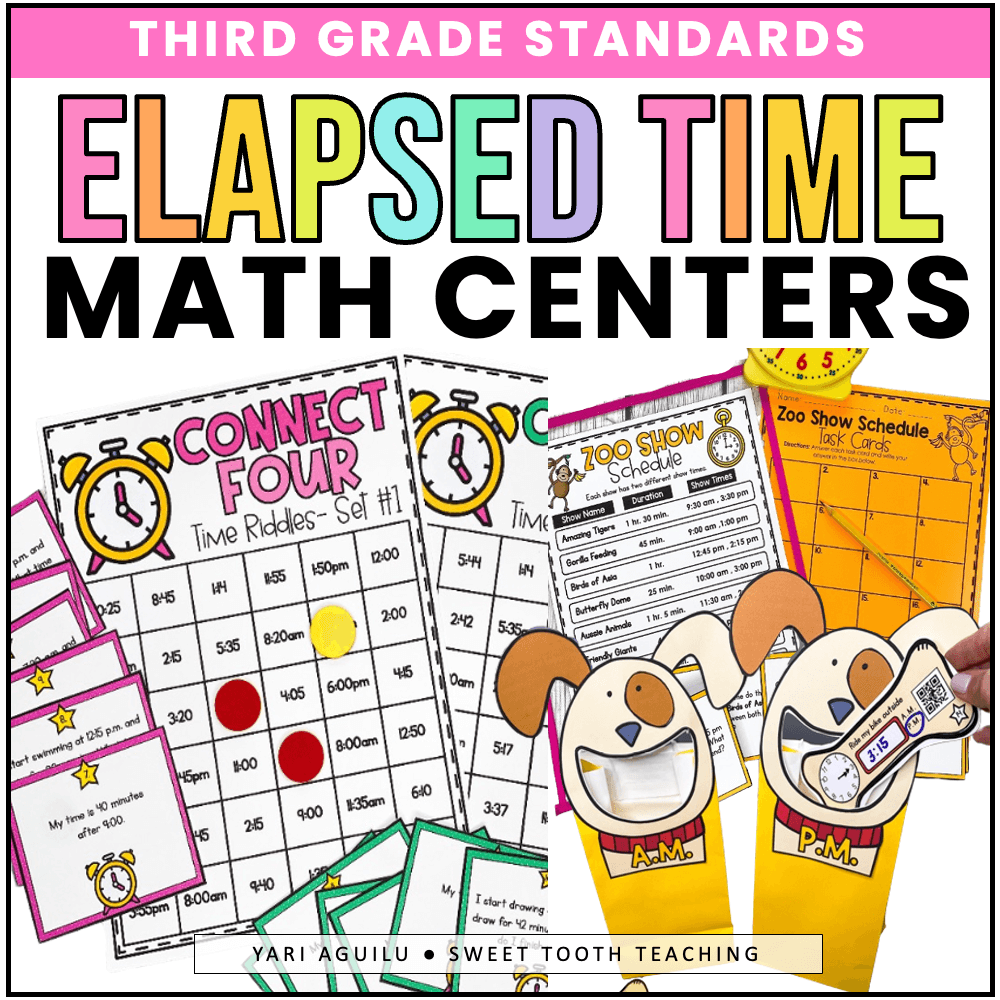
Elapsed Time Math Centers
Why Is Elapsed Time So Hard for 3rd Graders?
Before we dive into the solutions, let’s talk about why this skill is so tough:
AM/PM Confusion: Students often forget that the clock starts over at 12:00 and have a hard time deciphering morning vs. afternoon times.
Crossing the Hour: If a problem starts at 2:45 and ends at 3:10, students get stuck when the time “crosses over” into the next hour.
Calculating Time Backward: Going from end time to start time adds an extra layer of difficulty for developing brains.
No Visual Anchor: Unlike addition or subtraction with blocks or counters, time is an abstract concept unless it is made visual.
The best way to help students grasp elapsed time? Make it concrete with visual tools, real-life examples, and plenty of hands-on practice.
1. Use Geared Clocks for Hands-On Practice
Before jumping into word problems and elapsed time games, it’s important that students truly understand how clocks work.
Geared clocks or student-friendly Judy Clocks are a must-have tool for learning and practicing time-telling skills. Hands-on tools like geared clocks help bring time worksheets or any time activity to life with the help of an analog clock.
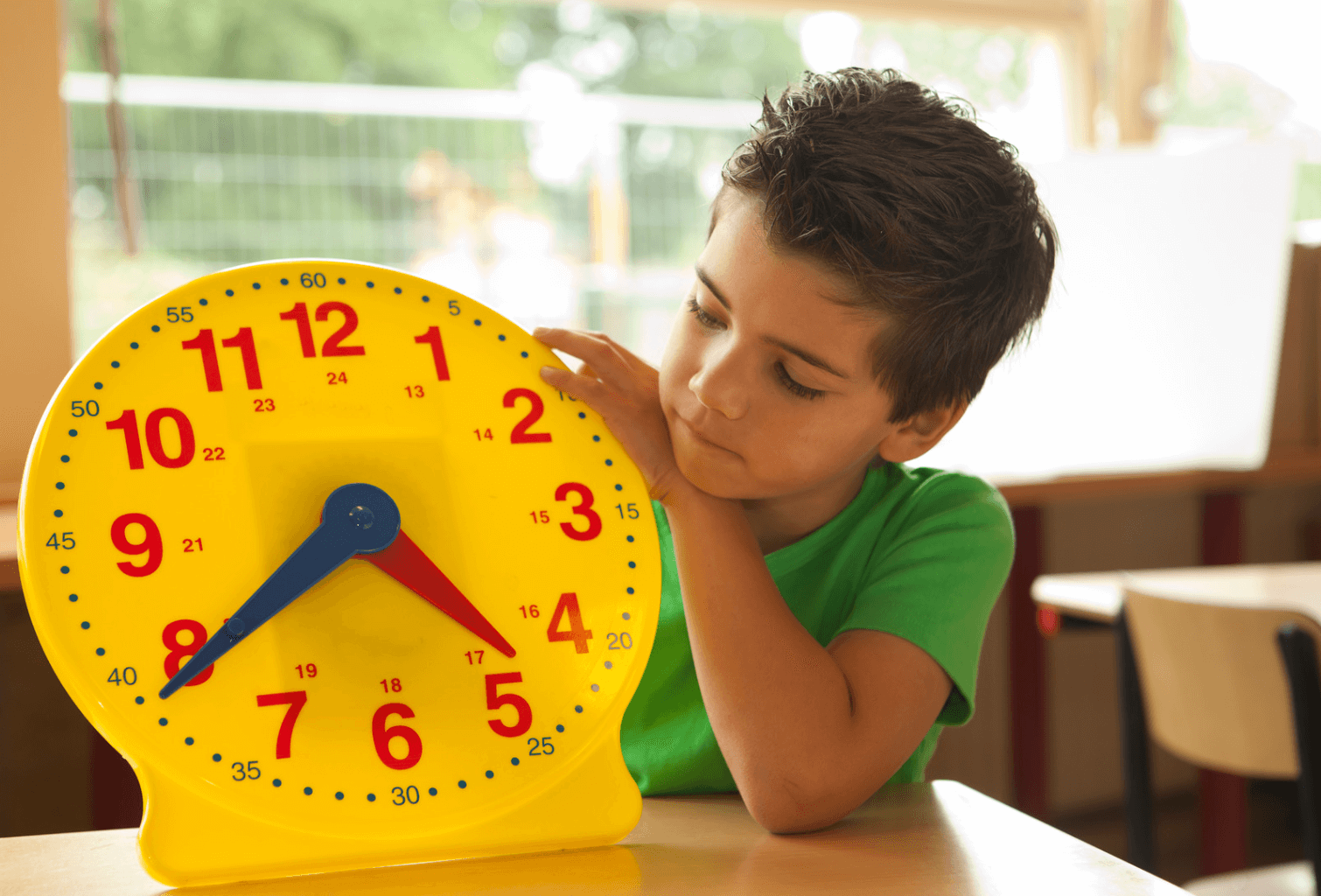
Let your students manipulate both the minute hand and hour hand on the clock face as they work through problems. Start by having them show a given time, then slowly move the hands forward to find the ending time or reverse the process to work backward. Practice having students move clock hands to match common intervals of time: half hour, quarter past, and quarter til.
This hands-on practice is especially helpful when students need to visualize time “crossing the hour.” Using clocks during small groups or math center rotations is a great way to help students visualize and solve time word problems with different units of time (hour, minute, groups of 15 or 30 minutes, etc.)
2. Teaching Elapsed Time with Number Lines
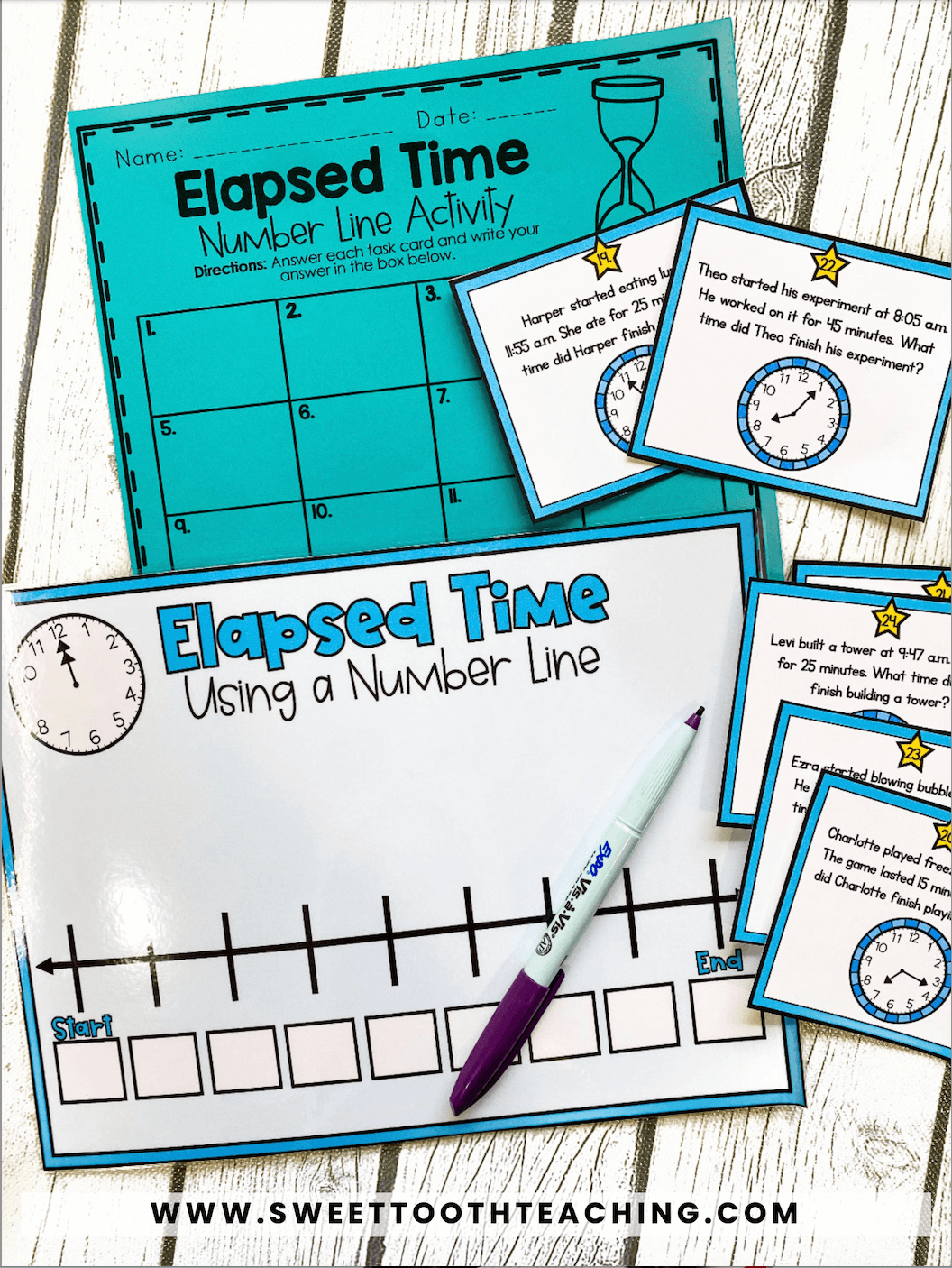
Elapsed time can be tough to grasp because it is so abstract. One of my favorite ways to make elapsed time more concrete for students is by using number lines. Whiteboards work perfectly for this activity!
Draw a horizontal number line, label the start and end times, and have students count forward in chunks—first by the hour, then by the minute. This method breaks the problem into manageable steps and helps students avoid common mistakes when trying to get the correct answer. The number line diagram is a fun way to track the time for daily activities down to the nearest minute.
Try this example with students:
“You started your homework at 2:10 and ended at 3:45. How long did it take to finish?”
Students can map this out on their number line diagram and count the elapsed time visually.
Want even more number line and hands-on activities like this one? Check out my Elapsed Time Activities Pack which includes task cards, time sorts, and games perfect for reinforcing this strategy!
3. Make It Real with Word Problems from Everyday Life
Let’s be real—elapsed time becomes a lot easier when it actually means something to students.
Instead of generic word problems, use real-life scenarios that students can relate to. Word problems that use daily routines students are familiar with can help them relate math skills, like keeping track of time, to their daily lives.
Think about including common routines in word problems: lunch breaks, bus rides, after-school sports practice, or bedtime routines.
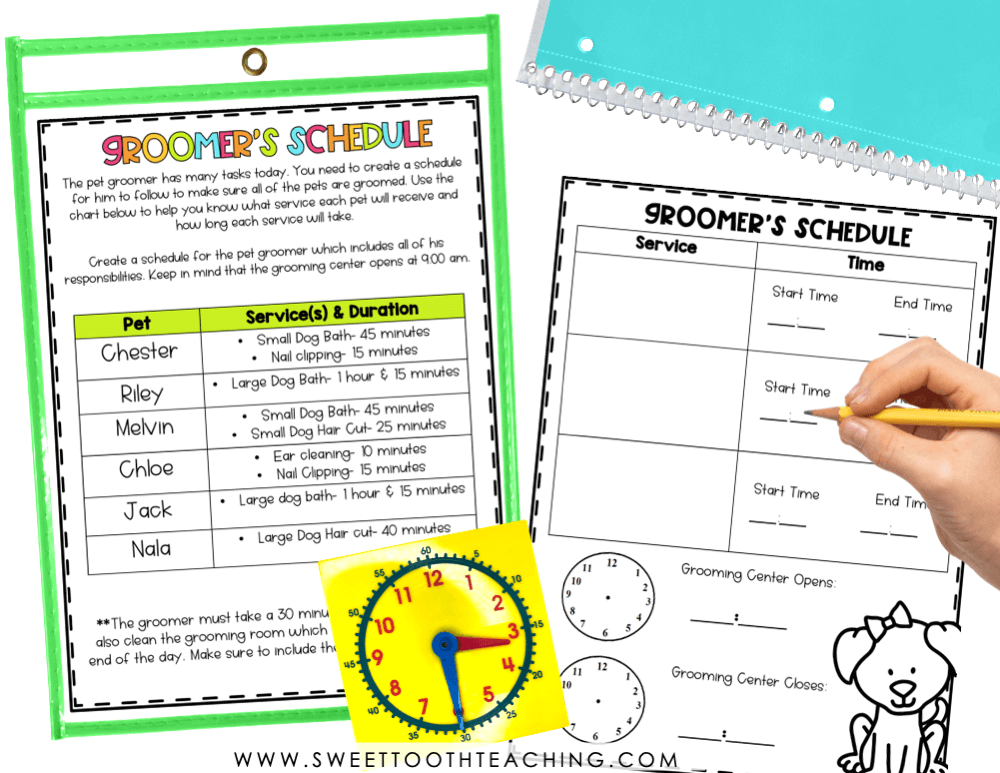
Resource featured: Pet Grooming Project-Based Learning
Example:
“You left for soccer at 4:15 and came home at 5:30. How long were you gone?”
You can even bring math practice to life in real-time —set a timer during a class task like reading time, then ask students to calculate how much time passed once the timer goes off. This provides additional practice with a real-life application in any subject area!
I share more ideas for making time meaningful and interactive in this Time Math Centers blog post including how to use interactive resources like elapsed time matching cards and scoot games!
4. Organize Their Thinking with a T-Chart
If your students are getting stuck halfway through a problem or forgetting what they’ve already counted, try teaching them how to use a T-chart. T-charts are helpful visual tools to use with any elapsed time math problem.
Here’s how it works:
One column shows the running time.
The other column shows the total time passed.
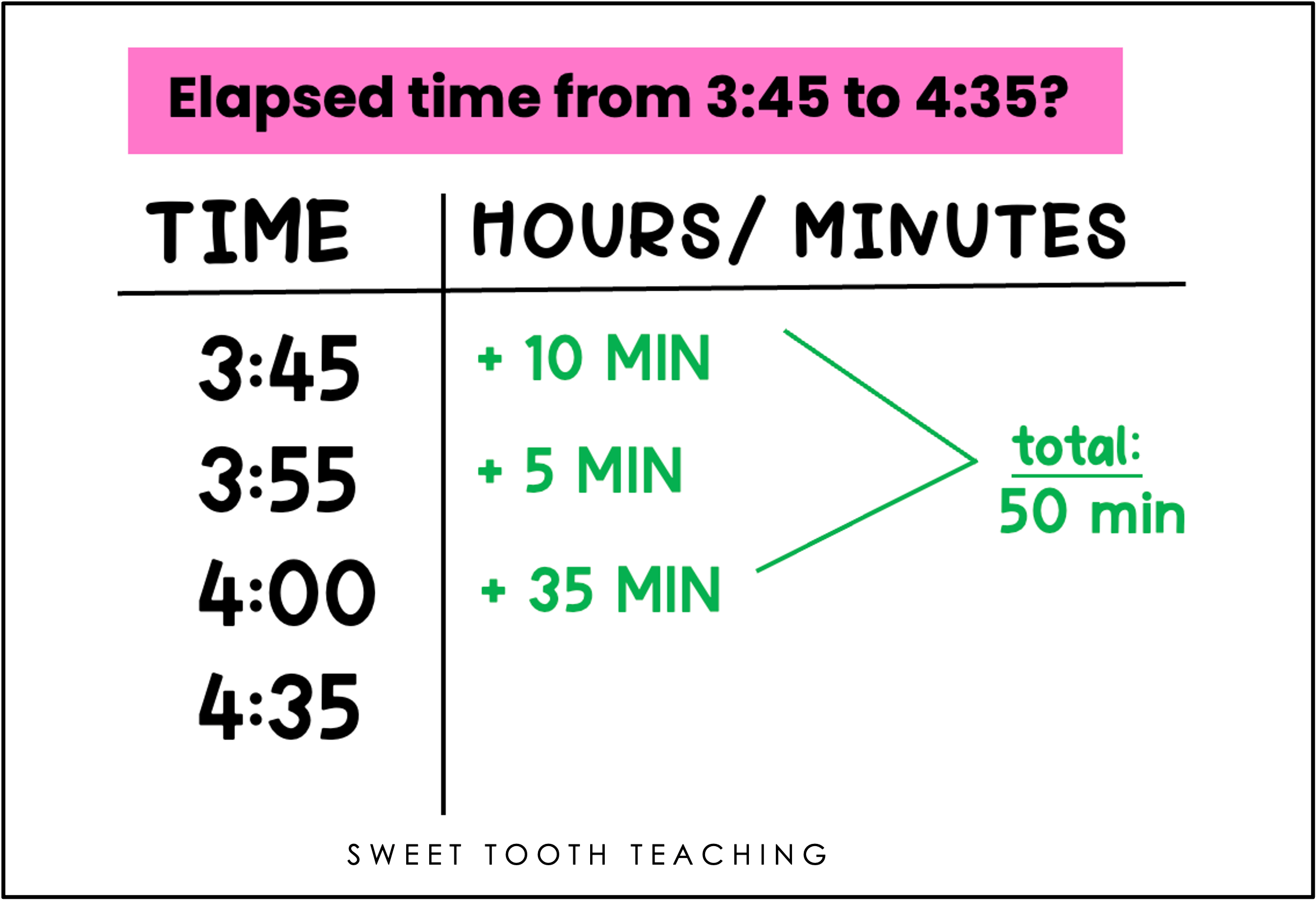
As students incrementally add 30 minutes or 1 hour, they can track both parts and clearly see the amount of time that has elapsed. This structure is perfect for students in any grade level who benefit from organizing their work step-by-step. T-Charts are really helpful when teaching students how to check their work and review how they found the correct time for a problem.
They also pairs perfectly with a telling time game or task card practice. You can set up your math centers using this strategy alongside the task cards in the Elapsed Time Activities Pack. Just set out copies of a pre-made t-chart for students to use with the problems!
5. Reinforce with Elapsed Time Games and Centers
Once students understand the basic concept of elapsed time, repetition and variety are key. That’s where elapsed time games come in.

Hands-on centers give students a chance to practice in a fun, low-pressure way. Some ideas include:
Task Card Scoot Games: Set cards around the room and let students rotate through, solving problems as they go.
Time Match-Up: Students match cards with start time, end time, and elapsed time.
Time Sorts: Students categorize word problems based on whether they’re solving for start, end, or over time.
All of these are included in my Elapsed Time Activities Pack, which was designed to support 3rd grade learners through high-interest, hands-on learning.
Elapsed Time Math Centers
Need more math games for comprehensive review or targeted practice? Check out this post with 20 Fun Classroom Math Games perfect for reinforcing skills all year long.
Elapsed Time Resource You Need!
Elapsed time doesn’t have to be the unit your students dread—and it doesn’t have to stress you out either. With these five simple strategies, you can turn confusion into confidence and create a classroom environment where students are excited to tackle time problems.
The key is combining visual tools, real-life examples, and hands-on engaging practice. Adding in some no-prep activities like the Elapsed Time Activities Pack will save you planning time and ensure that your students have so many ways to practice telling time in the classroom!

 Modern Jungle Classroom Decor
 Simple & Fun Math Games to Try in Your Classroom Today
 Fraction Classroom Transformation
 12 Fun Test Review Ideas & Activities


